Hands-Free Architecture Reviews: How I Use Voice Mode and SpecKit for .NET Design Sessions
Narrate your architecture. Let SpecKit turn it into a spec, a plan, tasks, and working code. No keyboard. No lossy translation.
21 posts on .NET, SQL, architecture, and the craft of building software. (page 1 of 2)

Narrate your architecture. Let SpecKit turn it into a spec, a plan, tasks, and working code. No keyboard. No lossy translation.

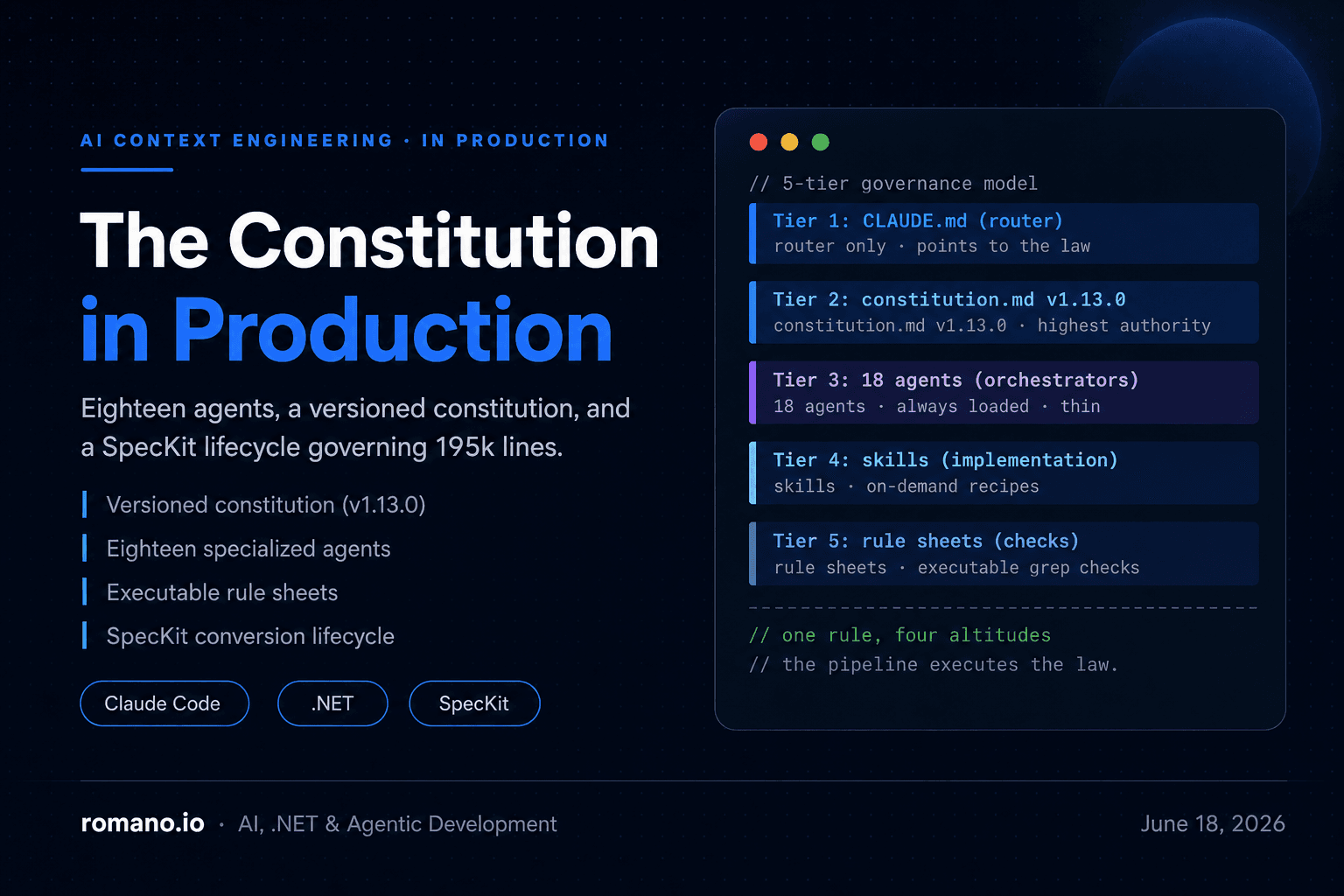
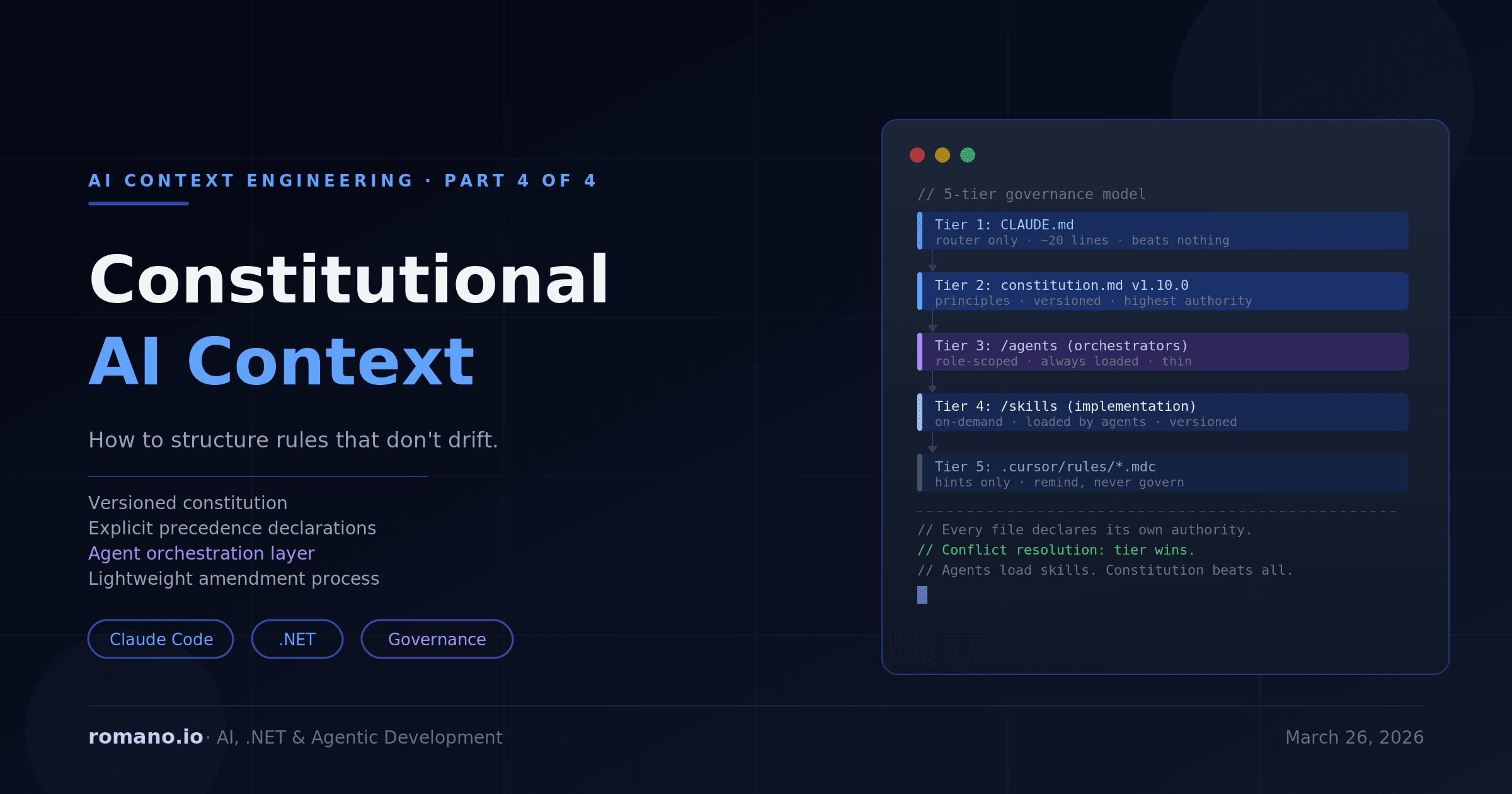
We had a workflow: end of every session, ask Claude to update the memory files with what we learned. It worked until we added UI specialists, dedicated agents, and more parallel sessions. All additive. None checking what the others had written. Here's the governance model that stopped it.

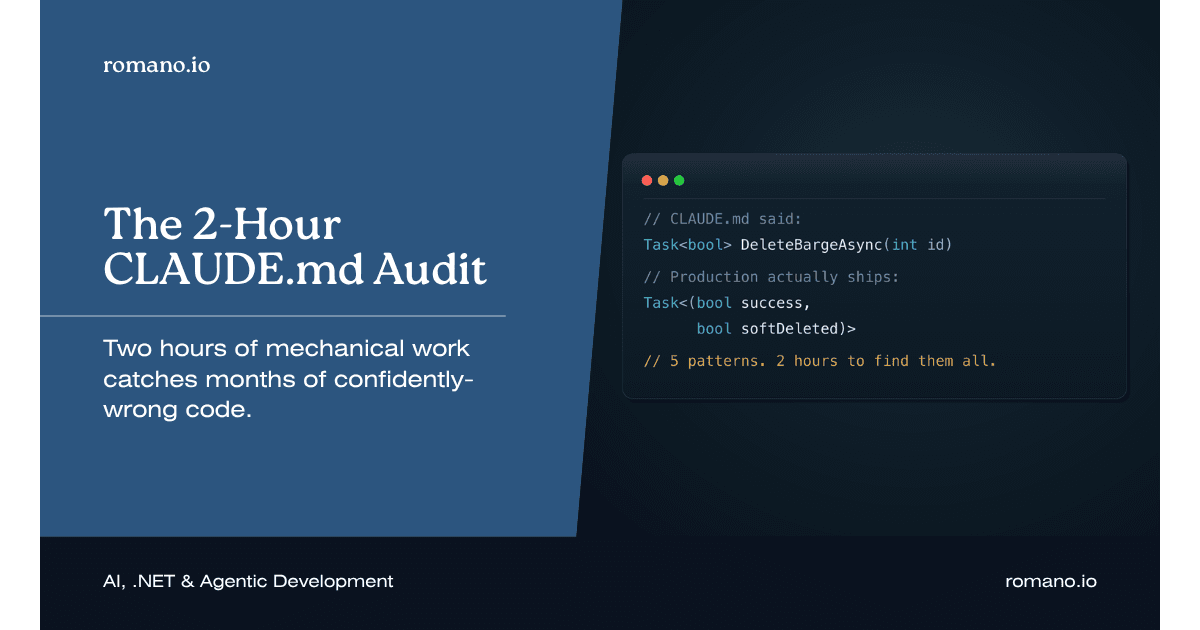
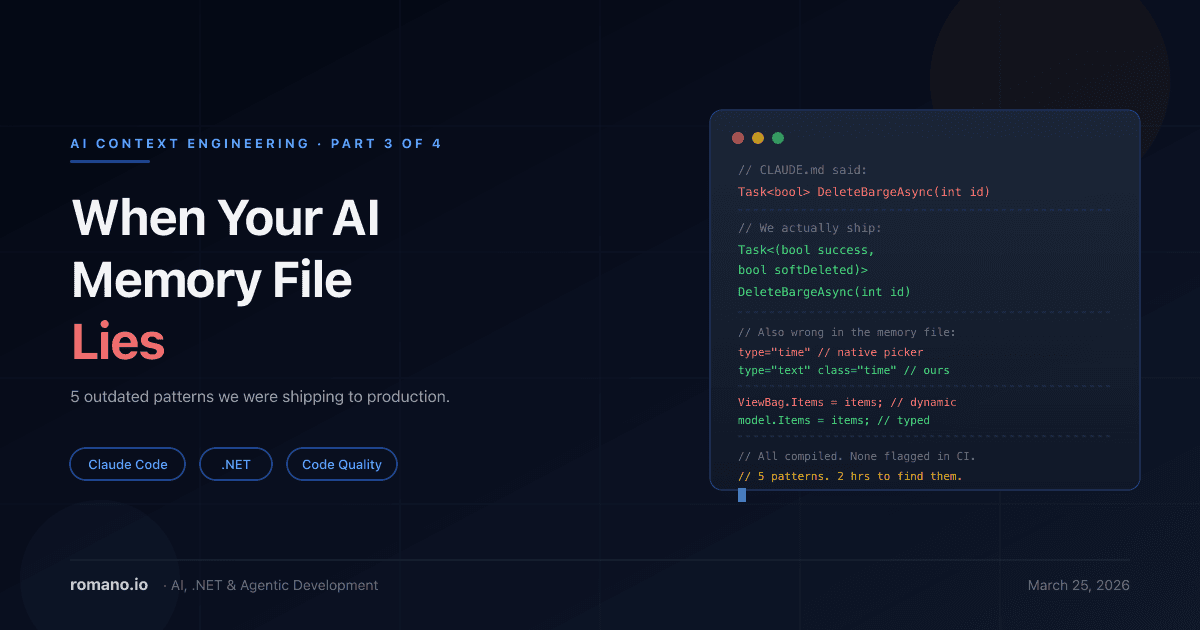
Claude was confidently generating deprecated code. We trusted the memory file. Here's what we found and why these bugs are invisible to code review.
A 564-line CLAUDE.md became a 23-line router. Eleven memory files became seven on-demand skills. Always-loaded context dropped 82%. The procedural knowledge didn't disappear. It grew. Here's the full arc.

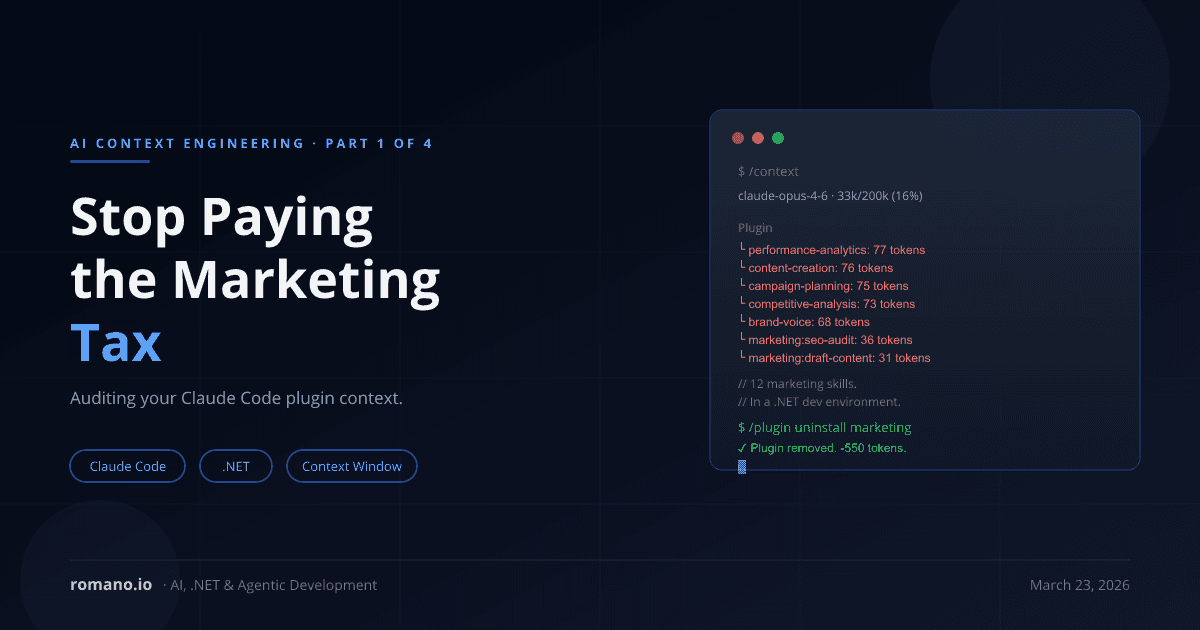
I found 12 uneeded skill/plugins in my .NET development environment. Here's how they got there and exactly how to remove them.

You've been writing C# for years. Now every tool wants you to talk to an AI. Here's how to actually start, without throwing out everything you already know.

A developer's honest look at what happens when your brain can't stop prompting, even when you're cleaning out the garage on a Saturday.

The biggest first-mover opportunity in the .NET AI ecosystem, and almost nobody's taking it.

How a 10-agent WinForms conversion system changed the way I think about 'being at my desk', and the SSH + Tailscale + tmux stack that makes it work.

Their ACM paper isn't a LinkedIn take. It's a peer-reviewed argument that the definition of seniority in software engineering has been fractured by generative AI. And from WAICF 2026, the same signal: seniority is no longer years of experience. It's judgment per token.

Nineteen years of ReSharper, Rider, and the full toolbox. Last month I let it lapse. Not out of frustration, but because I hadn't opened Rider in six weeks, and I didn't miss it.

AI doesn't introduce bad patterns into your codebase. It amplifies the ones that are already there, at machine speed.

Why 'developers don't write code anymore' is the wrong headline, and what the car wash problem tells us about where AI actually is.

A .NET architect's honest look at what happened when AI replaced the keyboard, and why the skills that made you senior five years ago are depreciating fast.

AI gave me back the part of the job I loved. It also removed the friction that forced me to stop.

Anthropic just shipped Programmatic Tool Calling, the feature that makes traditional tool calling look like dial-up. 37% fewer tokens. 13% higher accuracy. And a fundamentally different architecture.

Here's the thing nobody tells you when you start using AI coding agents: they trained on the internet. And most of the code on the internet is terrible. My job is to make sure it doesn't write like that for me.

78% of companies adopted AI. 80% saw no business impact. The generative AI paradox is real, and the Agile framework is the problem.

After more than 30 years of traditional software engineering, I went all in on agentic development. Not to dabble, but to build a complex new platform entirely from scratch this way. Here's what's real.

After years of chasing slow queries, most of the wins come down to a handful of indexing patterns. Here's the mental model I use every time.